What happened
Your medication was recalled or contaminated
Contamination and manufacturing defect claims work differently from warning claims, and better. When a drug contains something it shouldn't, the question is no longer what the label said. The product wasn't what it was supposed to be.
That means the preemption doctrine that blocks warning claims against generic manufacturers generally doesn't apply, because a manufacturer can always comply with both federal law and a duty not to ship a contaminated product.
Published July 27, 2026 · Last reviewed July 30, 2026
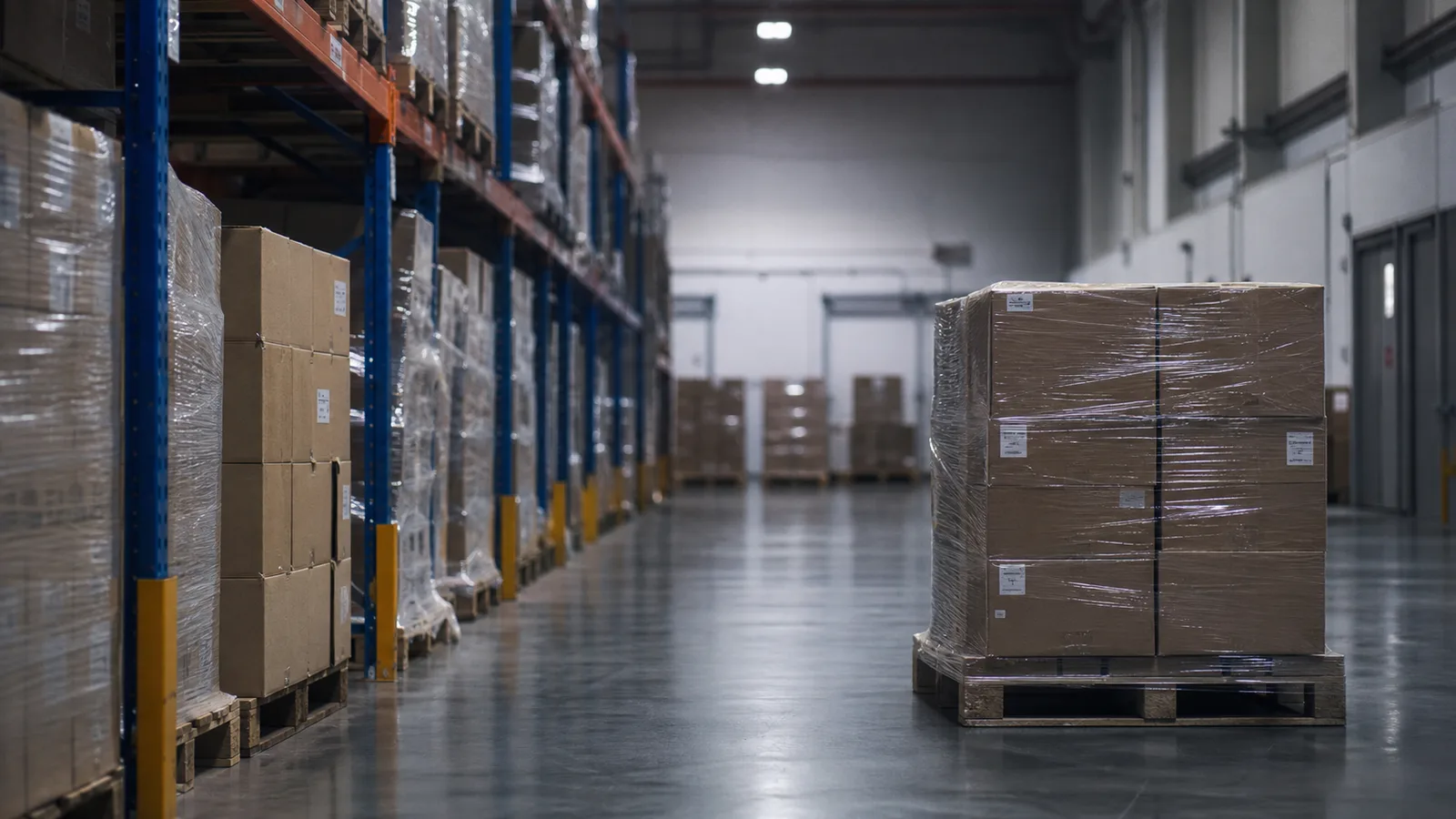
What tends to go wrong
The recurring categories in drug recalls.
- Chemical impurities formed during manufacture or storage, including probable carcinogens that have prompted large recalls across several drug classes
- Cross-contamination from other products made on shared equipment
- Sterility failures in injectables, which are the most acutely dangerous
- Potency errors — subpotent product that fails to treat, or superpotent product that overdoses
- Dissolution and stability failures, where an extended-release formulation releases incorrectly
- Foreign particulates
- Labeling and packaging errors at the manufacturing level
- Contamination in supplements and imported products, including undeclared pharmaceutical ingredients
What a recall establishes
A recall notice generally identifies the specific lots affected, the nature of the problem, and the date range of distribution. That's a documented admission that the product deviated from what it was supposed to be, published by the manufacturer and posted by FDA.
Recall classification matters: Class I means a reasonable probability of serious health consequences or death, Class II means temporary or reversible effects, Class III means a violation unlikely to cause harm.
A Class I recall covering a lot you took is about as strong a documentary foundation as exists in this field.
Matching your lot
The whole thing turns on connecting your specific fills to the recalled lots.
Your pharmacy dispensing record shows the manufacturer and NDC for every fill. Pharmacies also maintain lot-level records in many cases, and can often identify which lot a given fill came from. Request both, and request the complete history rather than a single fill.
If you still have the bottle, the lot number is on it. Don't throw it out, and don't return it to the pharmacy.
The long-latency problem
Some contamination claims involve exposures whose consequences appear years later. That raises real questions about when the filing clock started, and many states apply a discovery rule that starts it when you knew or reasonably should have known of the injury and its cause.
It also raises harder causation questions, since establishing that a particular exposure caused a disease that has other causes is genuinely difficult. Those cases are typically pursued in coordinated litigation where the scientific work is developed collectively.
What tends to make a claim worth pursuing
None of these is a guarantee. They are the facts an attorney will look for first when deciding whether to take a case like yours.
- A recall covers the drug, manufacturer, and time period you took it
- Your pharmacy records identify the manufacturer and NDC
- You still have the bottle with the lot number
- The recall was Class I
- You developed a condition associated with the contaminant
- There is existing coordinated litigation over the same recall
Questions
I threw the bottle away.
Pharmacy dispensing records still identify the manufacturer and NDC for each fill, and insurance pharmacy benefit records provide independent confirmation. Pharmacies can often determine lot-level information as well. The bottle helps; its absence isn't disqualifying.
I took a recalled drug but I'm not sick.
Injury claims require an injury. Some jurisdictions recognize medical monitoring claims for significantly increased disease risk from a proven exposure, but availability varies considerably by state. Talk to your doctor about whether monitoring is medically appropriate regardless of the legal question.
Does a recall mean I automatically have a case?
No. It establishes the product was defective, which is a substantial piece. You still need to show you took an affected lot and that it caused your injury. Those are the parts that take work.
Read next
Other situations
A prescription drug harmed me
The hardest claim here. Whether it's viable often turns on brand versus generic.
Read this
An OTC drug or supplement
Supplements are barely regulated pre-market. That cuts both ways.
Read this
An implant or device failed
How the FDA cleared the device usually decides whether you can sue at all.
Read this
The pharmacy made an error
The most provable claim here. The error is documented and preemption doesn't apply.
Read thisEvidence and research resources
See all resourcesEvidence checklist
The records, objects, photographs, and timelines worth preserving now.
Read thisPlain-language glossary
Medical, insurance, safety, and legal terms explained without the jargon.
Read thisOfficial sources
The government, court, safety, and medical sources used to check this site.
Read thisHave a lawyer look at this
A free review tells you whether the facts you have are the facts that matter. No cost, and no obligation to hire anyone.
Free · No obligation · About 90 seconds