What happened
The pharmacy dispensed the wrong thing
If a pharmacy dispensed the wrong medication, the wrong strength, or another patient's prescription, you're in a fundamentally stronger position than someone alleging a drug's known risk was inadequately disclosed.
The error is a discrete documented event, the causal link is direct, and none of the preemption doctrine that complicates drug manufacturer claims applies to a pharmacy.
Published July 27, 2026 · Last reviewed July 30, 2026
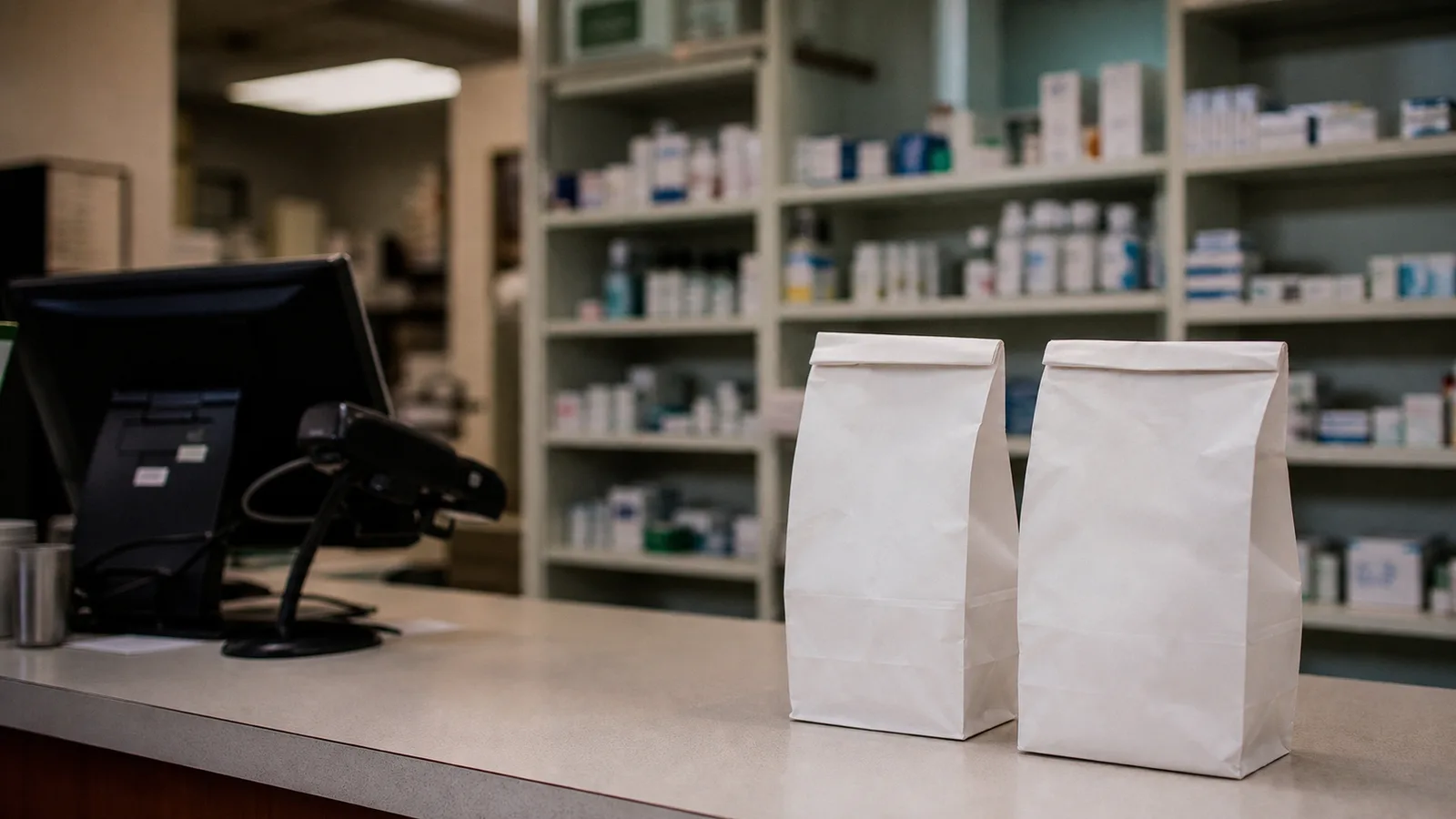
The recurring error types
Dispensing errors follow recognizable patterns, and each leaves its own evidence trail.
- Wrong drug — frequently a look-alike or sound-alike name confusion, a known and documented hazard in pharmacy practice
- Wrong strength — a tenfold dosing error is the classic and most dangerous version
- Wrong patient — another person's prescription handed over at the counter
- Wrong directions on the label, where the drug is right and the instructions aren't
- Failure to catch a known interaction, despite the software flagging it
- Failure to counsel on a critical warning where counseling was required
- Compounding errors, where a preparation is mixed incorrectly
Preserve everything, immediately
This is a physical evidence case as much as a records case, and the physical evidence gets discarded fast.
- The bottle, the label, and any remaining pills — do not return them to the pharmacy
- Photograph the label, including the NDC number, fill date, prescriber, and pharmacist initials
- The receipt and the pharmacy bag with its printed paperwork
- The original prescription if you have a copy, and your prescriber's record of what was ordered
- The dispensing record from the pharmacy, which you can request
- Anything the pharmacy said afterward, in writing where possible
- All medical records for treatment resulting from the error
Who is responsible
Usually more than one party. The pharmacist who filled it, the technician who prepared it, and the pharmacy corporation, which is generally liable for its employees' conduct and separately for its own systems — staffing levels, workload targets, verification procedures, and how alerts are handled.
That corporate dimension matters. Understaffing and production quotas at high-volume retail pharmacies have been a documented and litigated issue, and a claim framed around systemic conditions rather than a single distracted individual reaches further.
Depending on the facts, the prescriber may also share responsibility — an illegible or ambiguous prescription, or a failure to check for interactions.
This is usually a malpractice claim
Pharmacy errors are typically treated as professional negligence rather than ordinary negligence, and that classification has consequences.
Many states impose shorter deadlines for malpractice claims, require an expert affidavit or certificate of merit filed with the complaint, and cap non-economic damages. Some require a pre-suit notice period before filing.
None of that makes the claim harder to win — it makes it more time-sensitive at the front end. Get it reviewed promptly rather than assuming you have the ordinary personal injury window.
What tends to make a claim worth pursuing
None of these is a guarantee. They are the facts an attorney will look for first when deciding whether to take a case like yours.
- You still have the bottle, label, and remaining medication
- The label doesn't match what was prescribed
- You required treatment, hospitalization, or an emergency room visit
- The pharmacy acknowledged the error in any form
- There was a documented interaction alert
- You have the prescriber's record of what was actually ordered
Questions
The pharmacy apologized and offered to cover my costs. Should I accept?
Covering immediate medical costs isn't unreasonable, but be careful about signing anything. A release ends the claim permanently, including for consequences that haven't appeared yet. Have any document reviewed before signing, and keep the medication regardless.
I caught it before taking any. Do I have a claim?
Generally not much of one — injury claims require an injury, and a near-miss with no harm usually has no damages. It's still worth reporting to the pharmacy and to your state board of pharmacy, because pattern data is how systemic problems get addressed.
How do I get my dispensing records?
Request them directly from the pharmacy. You're entitled to your own records, and chains have a process for it. Request the full dispensing history rather than a single fill, and ask for the associated computer records including any alerts.
What if it was a mail-order or online pharmacy?
The same principles apply, with added complexity about which state's law governs and where suit can be brought. Preserve the shipping packaging and all correspondence along with the medication itself.
Read next
Other situations
A prescription drug harmed me
The hardest claim here. Whether it's viable often turns on brand versus generic.
Read this
My medication was recalled
Contamination claims sidestep the preemption problem entirely.
Read this
An implant or device failed
How the FDA cleared the device usually decides whether you can sue at all.
Read this
An OTC drug or supplement
Supplements are barely regulated pre-market. That cuts both ways.
Read thisEvidence and research resources
See all resourcesEvidence checklist
The records, objects, photographs, and timelines worth preserving now.
Read thisPlain-language glossary
Medical, insurance, safety, and legal terms explained without the jargon.
Read thisOfficial sources
The government, court, safety, and medical sources used to check this site.
Read thisHave a lawyer look at this
A free review tells you whether the facts you have are the facts that matter. No cost, and no obligation to hire anyone.
Free · No obligation · About 90 seconds